The incident review had a good timeline. That was the worst part.
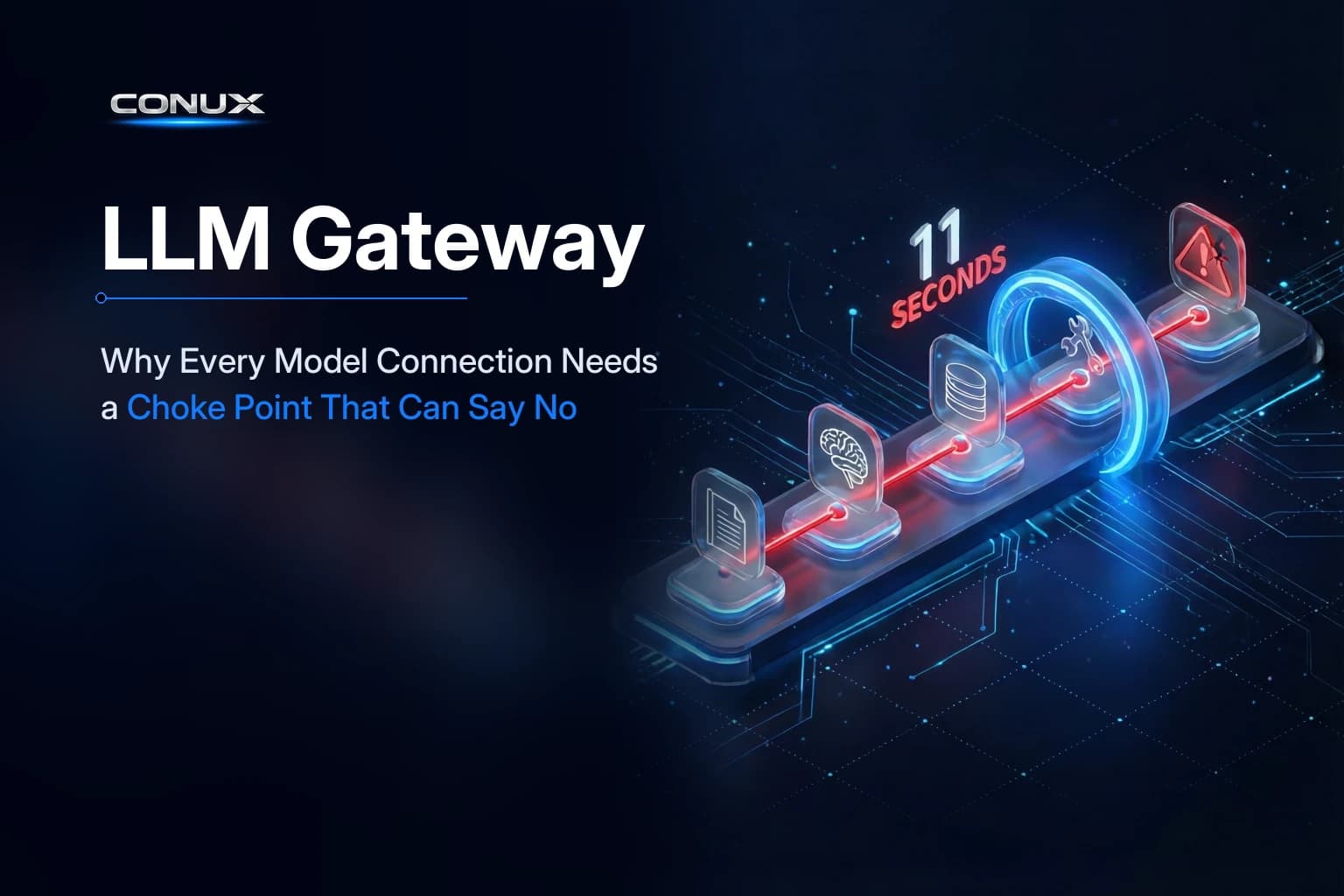
Every step was captured. The prompt that carried the injection, the moment the model interpreted embedded text as instruction, the retrieval call that pulled a document set nobody intended to expose, the tool invocation that sent it onward. Timestamps to the millisecond. A complete, accurate, well-formatted record of something that had taken eleven seconds and could not be stopped, because nothing in the path was capable of stopping anything.
That is the difference between an LLM gateway that observes and one that enforces.
Table of contents
- What an LLM gateway is for
- Why logging feels like control
- What enforcement actually requires
- The permissions problem underneath
- Model traffic is also being harvested
- Building the choke point without a rebuild
- Frequently asked questions
Key takeaways
- An LLM gateway is the single point every model connection passes through, in both directions.
- Logging produces an accurate record of incidents it was unable to prevent; enforcement requires the ability to decide and act inline.
- Blocking at machine speed needs rule generation, not only rule matching, because novel attacks have no signature yet.
- Agents act through machine identities whose permissions are usually broader than anyone intended.
- Prompts crossing to external providers are data in transit and are being captured today for later decryption.
What an LLM gateway is for
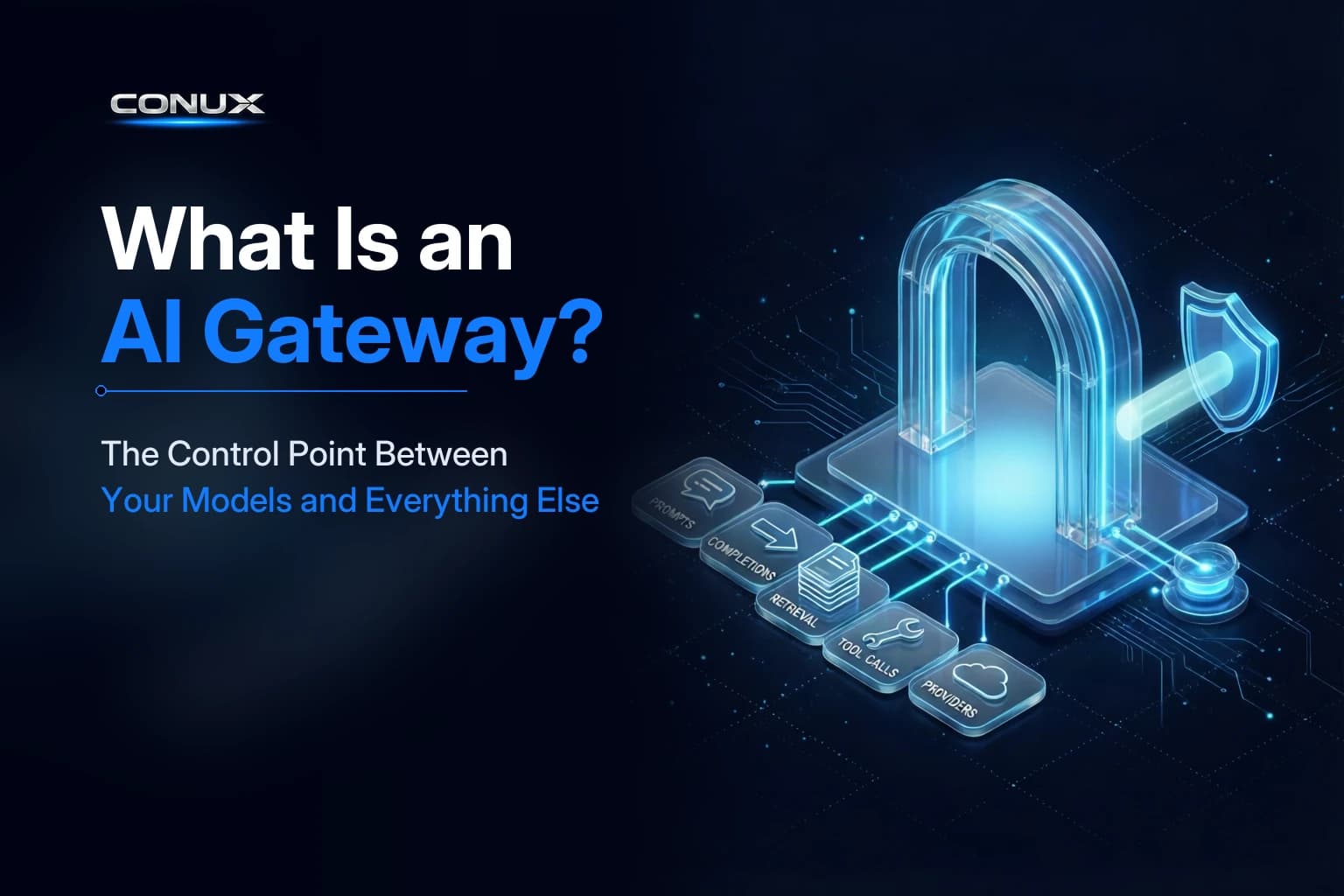
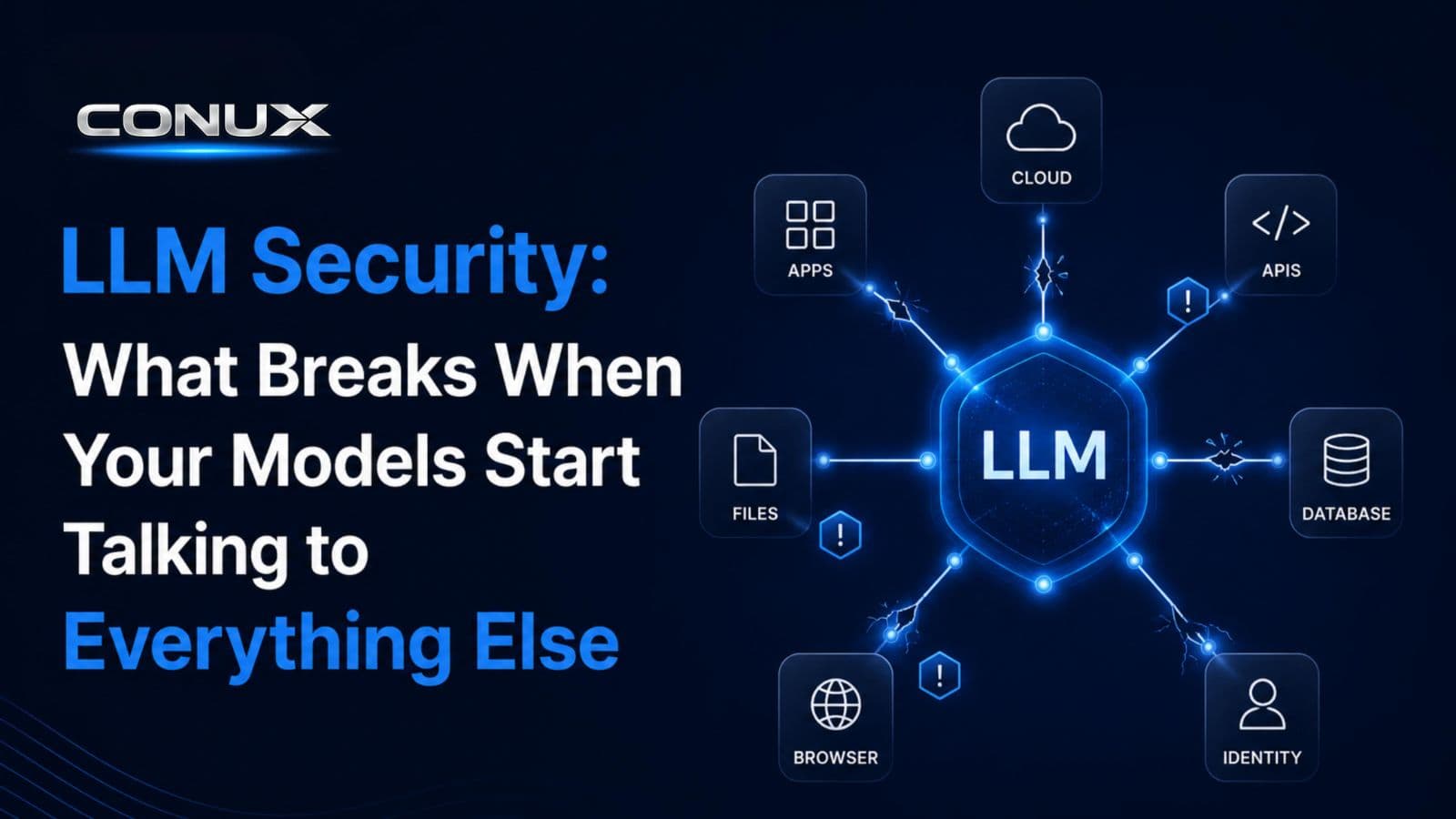
An LLM gateway sits between models and everything they can reach, and it exists because model connections do not behave like the traffic enterprise cybersecurity was designed around.
A conventional application does what it was programmed to do. A model does what its context persuades it to do, which means the boundary of its behaviour is set by input rather than by code. Anything that reaches the context window is potentially an instruction: a support ticket, a retrieved document, a web page, a file a customer uploaded.
That property is what makes models useful and what makes them a control problem. Enterprises responded by adding visibility, which was the right first move. The mistake is stopping there.
Why logging feels like control
Observability is seductive because it produces artefacts. Dashboards fill. Reports generate. Teams can answer questions about model usage that were unanswerable six months ago.
None of that changes an outcome.
If an LLM gateway detects a prompt injection and raises an alert, the response time is the time it takes a human to read, assess and act, tens of minutes at best. An autonomous attack chaining through model access into internal systems finishes in seconds. The alert is a notification about the past.
This is the same structural failure that undermines conventional security operations, arriving in a new place. Every tool an enterprise owns was designed to alert a person. Enterprise response is measured in hours. Autonomous attacks are measured in seconds. Everything in between is unprotected.
A gateway that logs gives you an excellent account of an incident you could not stop.
What enforcement actually requires
Saying no inline is harder than recording, and understanding why explains the state of the market.
Inline decisioning. The determination has to be made in the request path, within latency users tolerate. Analysis performed afterwards is analysis, not control.
Rule generation, not just matching. Injection techniques are generated as easily as any other text. Waiting for a signature is waiting for someone else to see the attack first. The gateway has to write the rule when it encounters the behaviour.
Bidirectional inspection. Prompts inbound and completions outbound. Sensitive disclosure travels outward, and a control watching only one direction misses half the risk categorised in the OWASP Top 10 for Large Language Model Applications.
Tool-call mediation. Deciding whether an agent may actually invoke a capability, send the message, write the record, move the money, at the moment it asks.
Evidence generation. Autonomous action that cannot be explained afterwards gets switched off after its first review. The record has to be a by-product of enforcement, not a separate system.
Conux runs this as a loop of five agents. One detects. One blocks and writes the rule. One hardens the surface. One logs the evidence. One orchestrates the other four. Detect. Block. Adapt. Prove. No queue, no analyst, no delay.
The permissions problem underneath
Most model incidents are not really model failures. They are identity failures that a model made reachable.
An agent acts through credentials. Those credentials were usually issued during a pilot, scoped generously so the prototype would work, and never revisited once the prototype became production. The model did not escalate privilege, it used privilege that was already there and had been forgotten.
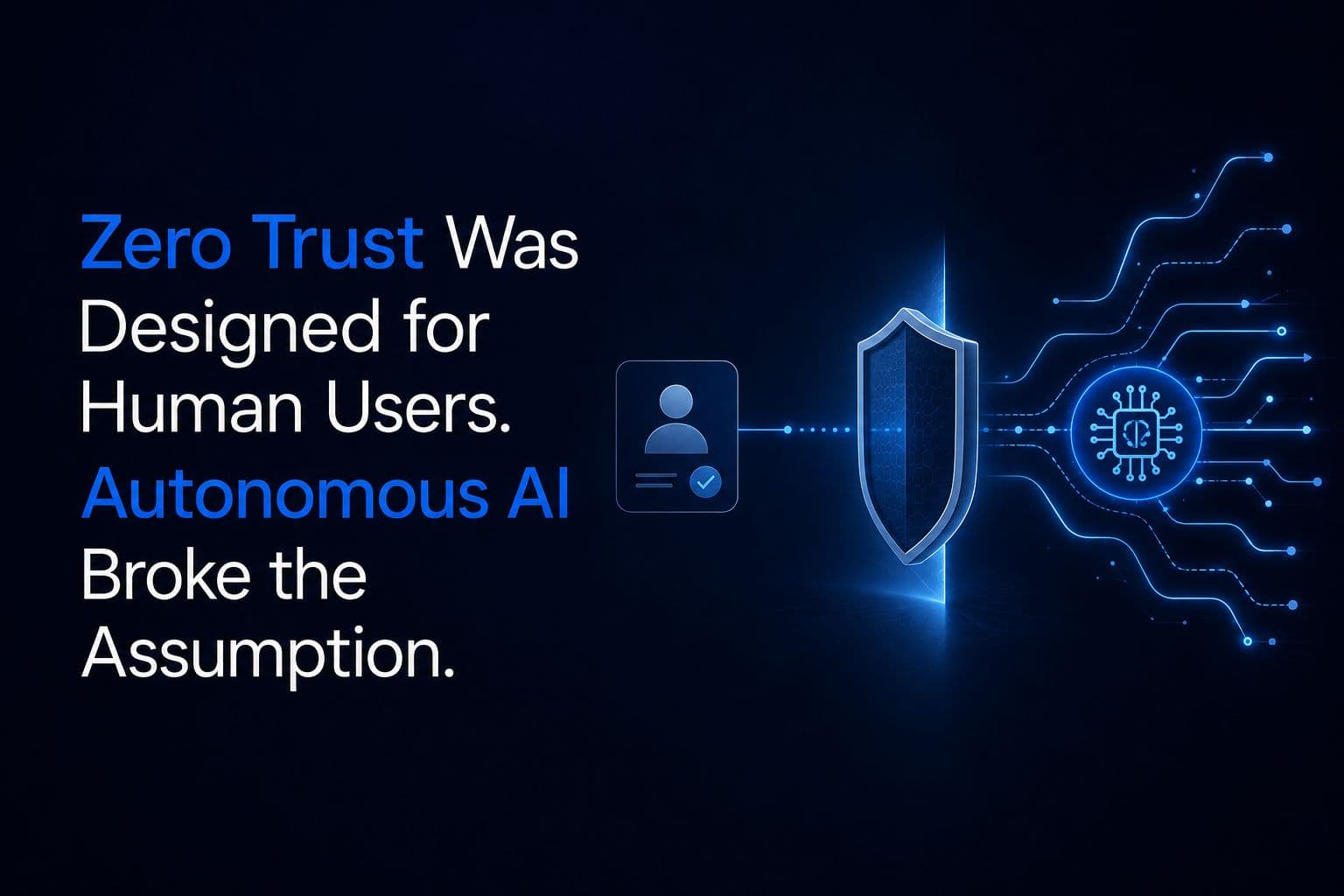
This is why an LLM gateway that inspects content but ignores machine identity solves half a problem. The question is not only whether a request is malicious. It is whether this identity should be able to make this call at all, and whether anyone has reviewed that in the last year.
Governing machine identities at the same point as content inspection collapses two problems into one control. The NIST AI Risk Management Framework is a reasonable structure for deciding what should be permitted; the gateway is where that decision becomes something other than a document.
Model traffic is also being harvested
There is a second adversary on this traffic, and it is invisible because it does nothing to your systems at all.
Prompts sent to external model providers cross networks the enterprise does not control. Nation-state actors are capturing encrypted traffic today, storing it, and waiting for quantum capability to mature enough to decrypt it. Harvest now. Decrypt later. Exploit forever.
Enterprise prompts are an unusually rich target. They routinely contain customer data, contract terms, source code, internal strategy and unreleased financial detail, precisely the categories with a confidentiality life measured in years rather than weeks. That data does not become safe because the conversation ended.
CNSA 2.0 mandates post-quantum compliance from 2027, with Canada, the EU, the UK and the UAE following. An LLM gateway that inspects content thoroughly while forwarding it under classical encryption has protected the meaning and exposed the transmission.
Building the choke point without a rebuild
The practical objection is deployment. Enterprises will not re-architect model infrastructure that took a year to stand up.
They should not have to. A gateway works as a control point precisely because nothing else moves. Existing cloud stays. Existing identity stays. Existing applications and models stay. The cybersecurity gateway sits in the middle of what is already deployed, and every connection routes through it.
At that one point, autonomous attacks are blocked in seconds rather than escalated, quantum-safe encryption is applied to every connection including provider traffic, machine identities are governed rather than assumed, and audit evidence is generated continuously.
Weeks to deploy. No rebuild. Invisible to users. One deployment rather than two programmes colliding at a 2027 deadline.
Related reading: what an AI gateway is, LLM security and enterprise AI security.
The bottom line
The value of an LLM gateway is decided by one question: can it say no.
A gateway that logs produces an accurate account of incidents it watched happen. A gateway that enforces changes what happens, and, if it also encrypts what it forwards, protects the traffic against the adversary that is not trying to be noticed at all.
Two attackers. One gateway.