We would never let an anonymous employee move money, sign contracts, or access customer data. We are about to let millions of anonymous AI agents do exactly that.
The enterprise is racing to deploy AI agents -- software that does not just answer questions but takes actions: booking, buying, configuring, escalating, transacting. Each one is a new actor with real power inside your systems. And almost none of them have a real identity.
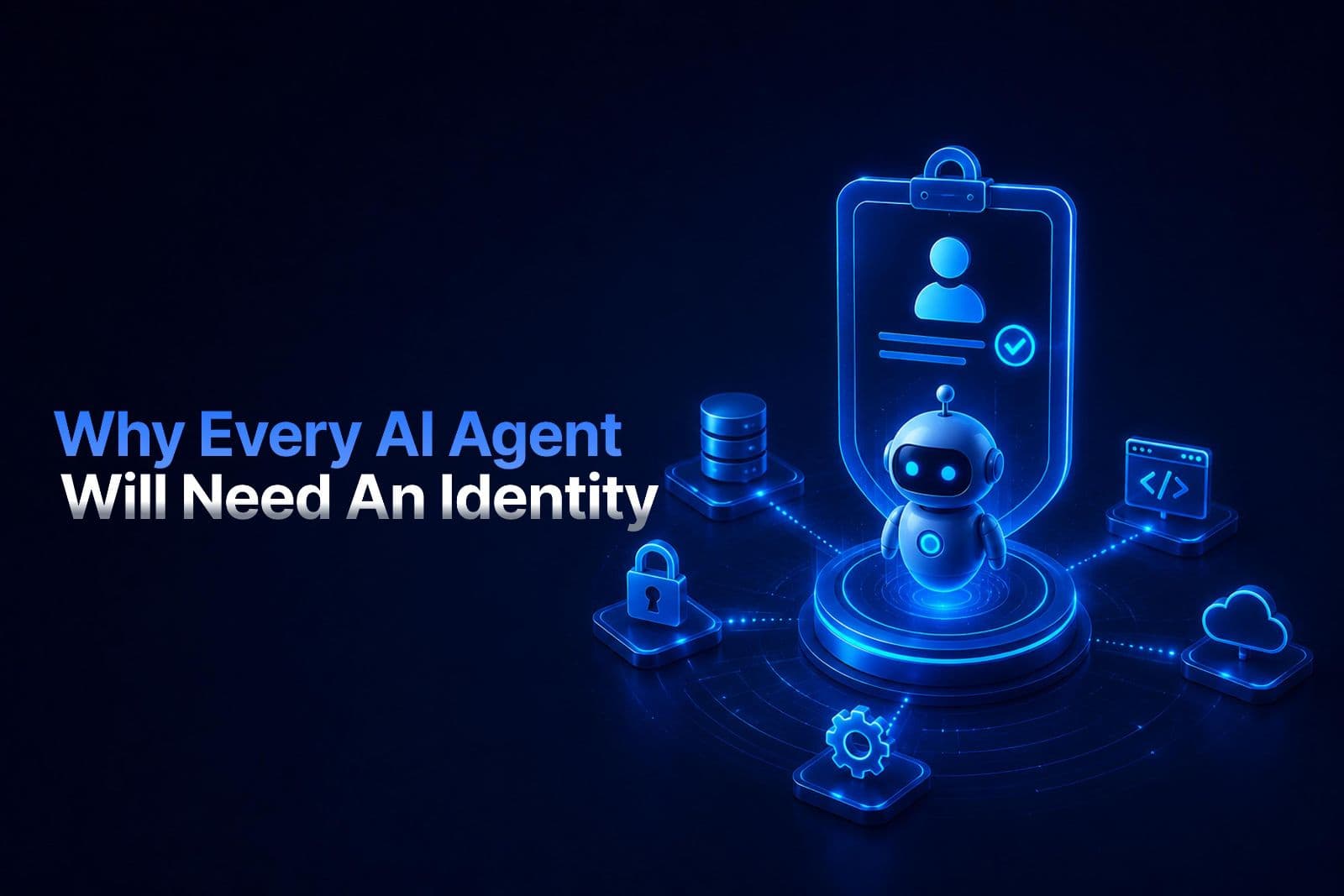
An identity is what makes an actor accountable. Without it, you cannot say with confidence which agent did what, whether it was authorized, or whether it was the legitimate agent at all. As autonomy scales, agent identity stops being a technical nicety and becomes the difference between automation you can trust and automation you cannot.
Action Demands Accountability
The moment an AI stops advising and starts acting, it inherits the same requirement we place on every human actor: prove who you are and answer for what you did.
A chatbot that drafts an email is low-stakes. An agent that sends the email, updates the CRM, and issues a refund is an actor with consequences. We govern human actors with identity, permissions, and audit trails for exactly this reason -- and agents need the same, only faster.
Without identity, an agent's actions are unattributable. When something goes wrong -- and at scale, it will -- you are left unable to answer the first question any investigation asks: who did this?
The Impersonation Problem
If an agent cannot prove it is the legitimate agent, anything that mimics it can act in its place.
Agents communicate with other agents, APIs, and systems. If those interactions rely on a shared key or an assumed trust, a compromised or malicious process can impersonate a trusted agent and inherit its access. The blast radius is the agent's privileges -- often considerable.
Strong, cryptographic agent identity closes this door. Every agent proves itself on every interaction, so impersonation requires breaking cryptography rather than simply guessing a pattern.
Authority, Not Just Identity
Knowing which agent is acting is only half the answer. The other half is knowing what it is allowed to do -- and enforcing it automatically.
Human roles encode authority: a clerk cannot approve a million-dollar wire. Agents need the same scoping. An agent identity should carry verifiable, least-privilege authority so that even a compromised agent cannot exceed its mandate.
This turns identity from a label into a control. The identity is not just a name tag; it is the boundary of what the agent can do, enforced cryptographically rather than trusted by convention.
Identity That Survives the Quantum Shift
An agent identity is a cryptographic credential -- and a credential that quantum computing can forge is no identity at all.
Agent identities will be issued, signed, and verified with cryptography. If that cryptography is quantum-vulnerable, the identities built on it are too. Enterprises standing up agent fleets today on classical cryptography are creating an identity foundation with a known crack.
Conux builds agent identity to be quantum-resilient from issuance, so the trust placed in an agent today still holds after the cryptographic ground shifts.
The Standard We Will Look Back On
Within a few years, deploying an AI agent without a verifiable identity will look as reckless as running production without access controls.
Every infrastructure shift eventually produces a baseline that becomes non-negotiable. Firewalls, TLS, multi-factor authentication -- each was once optional, then obvious. Agent identity is on the same path.
The organizations that adopt it early will scale autonomy with confidence. The ones that wait will spend the agentic era unable to answer for what their software did. Conux is building so the answer is always available.
Every AI agent will need a verifiable identity. Conux issues identity built for autonomy and the quantum era -- talk to our team.