When quantum security stalls inside an enterprise, the instinct is to assume the technology isn't ready. It's a comforting explanation, because it means the delay isn't anyone's fault.
It's also wrong. The algorithms are standardized (NIST finalized the first set in 2024). The migration paths are mapped. The deadlines are published. What's missing in most organizations isn't quantum security technology. It's an owner.
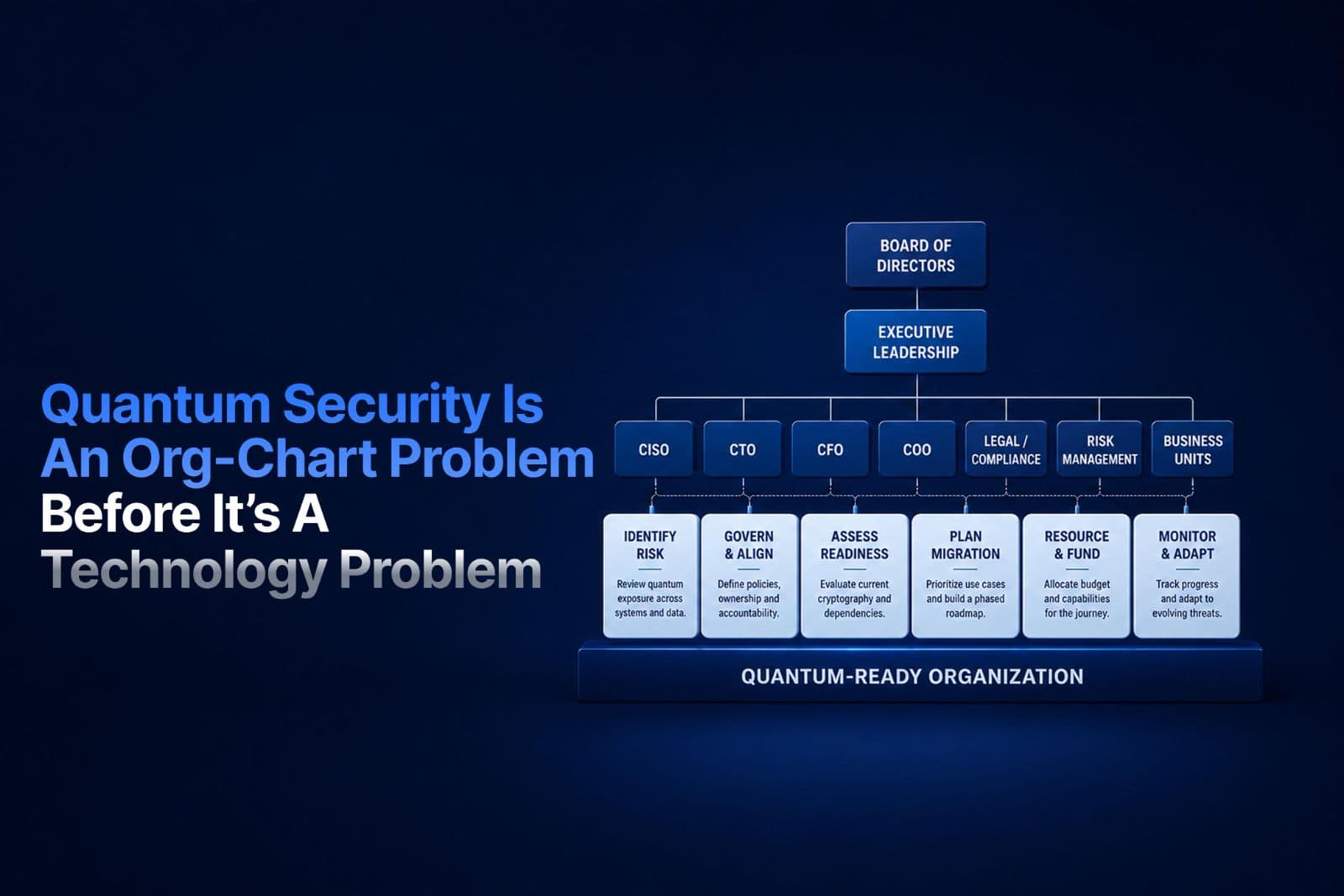
"In most enterprises, quantum risk doesn't live inside any one team. It lives in the unowned space between the boxes on the org chart."
The Quantum Security Gap Is Coordination, Not Capability
Walk through almost any enterprise and you'll find the pieces already present. IT owns the network. A PKI team owns certificates. Application teams own their encryption settings. Legal owns the compliance calendar. Every piece has a custodian.
What no one owns is the whole. No single person is looking across all of it and asking, "What is our actual exposure?" That unowned space between the boxes on the org chart is where quantum security risk quietly accumulates, which is why an estimated 97% of enterprises remain unprepared despite the technology being available.
Why Distributed Ownership Becomes No Ownership
When responsibility is split across five teams, each can be doing its job well while the enterprise as a whole moves nowhere. Everyone assumes the coordination is someone else's remit. The result is genuine effort and zero forward motion, the most frustrating failure mode there is.
This is the same lesson many learned rolling out AI: the technology was the easy part; deciding who owned the outcome across the organization was what determined whether anything actually shipped. Quantum security follows the identical pattern.
What "Holding the Question" Looks Like
The organizations that make progress on quantum security do one unglamorous thing first: they give the question a single owner with the authority to see across silos. Not a new tool. A clear line of accountability. The first real output isn't a migration. It's a unified picture of exposure that didn't exist before.
Everything technical gets easier once someone is genuinely holding the question. Everything stays stuck until they are.
The Leadership Decision Underneath It All
Quantum security ultimately isn't decided by the size of the security budget or the brilliance of the engineering team. It's decided by whether someone in the room declares that this question gets a real answer, now, and is given the mandate to coordinate one before CNSA 2.0's 2027 milestones arrive.
That is a leadership decision, not a technical one. And it's the decision that makes every other one possible.
Three Symptoms of an Ownership Gap
You can usually diagnose the problem without a technical audit. The first symptom is the deflection loop: ask who is accountable and every team points somewhere else. The second is the activity illusion: multiple groups are genuinely busy on related tasks, yet no one can produce a single unified picture of exposure. The third is the perpetual "next quarter," where the work is always real and always deferred.
Each symptom looks like a scheduling or resourcing issue. None of them is. They are all the same root cause wearing different clothes: a question that belongs to everyone, and therefore to no one.
The First Hundred Days of Real Ownership
When an enterprise finally assigns a true owner, the early wins are not technical migrations. They are visibility and alignment. In the first stretch, the owner produces an inventory that didn't exist, a risk-ranked map of what matters most, and a shared timeline tied to the regulatory clock.
That sounds modest. It is transformative, because for the first time the organization can see the whole problem at once and make decisions against it. Everything downstream (budget, sequencing, vendor selection) becomes tractable the moment a single person is genuinely holding the question.
The Decision Only Leadership Can Make
No tool assigns ownership. Only leadership can. The single most consequential move in quantum security is also the least technical: naming the person accountable for the whole question and giving them the authority to act across silos. Everything else is downstream of that one decision, and no amount of budget or engineering talent substitutes for it.