Most organizations treat cryptographic change as a one-time migration. The ones that thrive will treat the ability to change as a permanent capability.
The instinct when facing the quantum transition is to scope a project: migrate to new algorithms, check the box, move on. That instinct is understandable and wrong. Cryptography is no longer something you set once. It is something you will change repeatedly, as standards evolve, algorithms are broken, and threats shift.
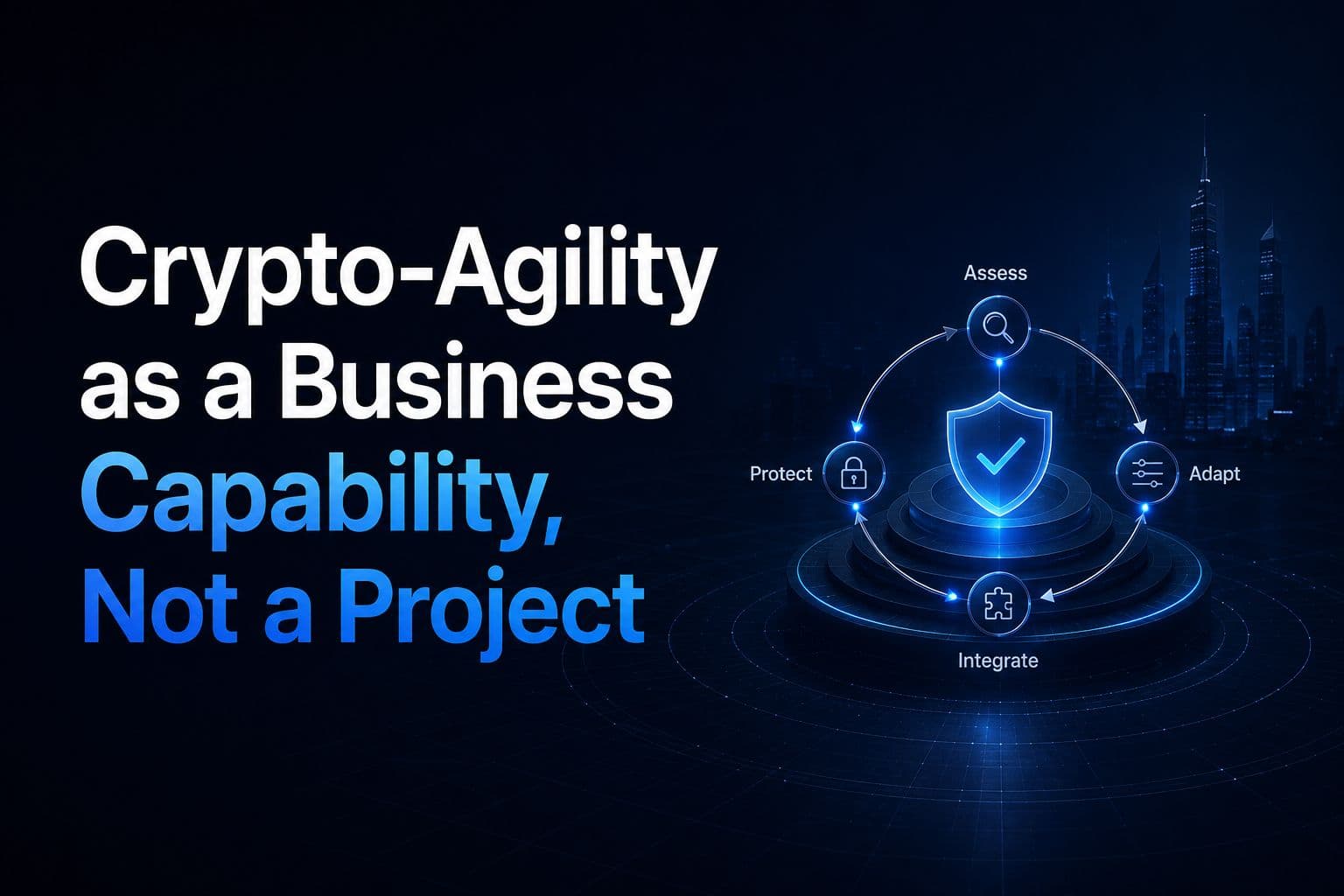
Crypto-agility, the ability to change cryptographic algorithms quickly and safely across the enterprise, is not the deliverable of a migration project. It is a durable business capability, like financial controls or disaster recovery. The organizations that build it will adapt to whatever comes; the ones that run a one-time project will be back at square one with the next change.
Why 'Migrate and Move On' Fails
A one-time cryptographic migration solves today's algorithm and leaves you exactly as stuck for tomorrow's.
If you hard-wire new algorithms the way the old ones were hard-wired, you have changed the cryptography but not the fragility. The next required change, and there will be a next, triggers the same painful, enterprise-wide scramble.
The quantum transition is not a single event. Standards will iterate, primitives will be deprecated, and new threats will emerge. 'Migrate and move on' optimizes for a world that no longer exists.
Agility as Infrastructure
Crypto-agility means cryptography is abstracted, inventoried, and swappable, so changing an algorithm is a controlled operation, not a crisis.
An agile organization knows where all its cryptography lives, decouples applications from specific algorithms, and can roll a change across the estate deliberately. The ability to change becomes a property of the infrastructure rather than a heroic effort.
This is the difference between an enterprise that adapts to cryptographic change in weeks and one that takes years and still misses assets.
A Capability the Board Can Understand
Boards already fund capabilities that manage ongoing risk. Crypto-agility belongs in that category, not in the one-off project budget.
Disaster recovery, financial controls, and compliance are funded as standing capabilities because the underlying risk never goes away. Cryptographic risk is now the same: permanent, evolving, and material. Framing crypto-agility as a capability aligns it with how boards already think about durable risk.
This reframing also unlocks sustained investment rather than a single project budget that expires the moment the box is checked.
Agility Is What Makes Quantum Survivable
No one knows exactly which algorithms or timelines will win. Agility is the hedge against that uncertainty.
Standards bodies are still finalizing and revising post-quantum algorithms. Betting the enterprise on one fixed choice is risky; building the ability to adopt whatever prevails is prudent. Agility turns uncertainty from a threat into something you can absorb.
Conux builds crypto-agility as core infrastructure, so the enterprise can move with the standards rather than being trapped by yesterday's bet.
From Project to Capability
The enterprises that survive the quantum era gracefully will be the ones that stopped treating cryptography as a project and started treating change itself as the asset.
The shift is mental before it is technical: from 'migrate once' to 'be able to migrate always.' That capability pays off not only at Q-Day but at every cryptographic change for the next decade and beyond.
Conux delivers crypto-agility as a standing business capability: the foundation of a quantum-resilient, perpetually adaptable security posture.
Crypto-agility is a permanent capability, not a one-time project. Conux builds it into your foundation, let's discuss.